The Fatal Flaw: Oil, Software, and Why Sprinters Actually Break

The Fatal Flaw: Oil, Software, and Why Sprinters Actually Break
Pricing note: All repair cost estimates in this article reflect typical independent and dealer pricing as of Q1 2026 and should be treated as approximate ranges. Labor rates vary significantly by region and shop. Verify current pricing with your service provider.
01The "Fatal Flaw" Myth vs. Reality
Search "Sprinter reliability" and you'll find two camps: people who swear the platform is a money pit engineered to fail, and people who've put 400,000+ miles on theirs with nothing more than scheduled maintenance. Both are telling the truth about their experience. The difference between them almost always comes down to one thing: oil specification.
Not oil change frequency. Not synthetic vs. conventional. The actual Mercedes-Benz specification printed on the bottle. Get this wrong and the engine slowly destroys itself from the inside: carbon deposits building in places they shouldn't, seals degrading ahead of schedule, aftertreatment systems choking on ash they were never designed to handle. Get it right and the Sprinter diesel powertrain is genuinely one of the most durable platforms you can buy.
The engines themselves (the OM647, OM642, OM651, and OM654) are not fragile. They're the same engine families that power Mercedes sedans, SUVs, and commercial trucks across Europe, where many rack up 500,000+ km as delivery vehicles and taxis. The difference isn't the hardware. It's what goes into the crankcase and how the vehicle is maintained.
Sprinter-Source.com member, 2024: "My 2006 has 445,000 miles. Runs perfect. Regular maintenance is key." Another member reports a transplant engine at 95,000 miles in a chassis with 360,000 miles — still running. The common thread among high-mileage Sprinters isn't luck. It's correct maintenance from day one.
02Mercedes Oil Specs Explained: Why Generic "Diesel Oil" Destroys Injectors
Mercedes-Benz doesn't just recommend oil weights like 5W-30 or 5W-40. They maintain their own proprietary approval system — MB Sheet numbers — that dictate the exact formulation chemistry an oil must meet. For Sprinter diesels, the relevant specifications are:
| Specification | Formulation | Application | Key Characteristic |
|---|---|---|---|
| MB 228.51 | Low-ash, low-SAPS | Commercial diesel with DPF (European spec) | Lower sulfated ash — less carbon buildup in aftertreatment |
| MB 229.51 | Low-SAPS synthetic | Passenger diesel and Sprinter (North American dealers historically) | Adequate for DPF but higher ash than 228.51 |
| MB 229.52 | Low-SAPS synthetic, latest formulation | Current MB recommendation for all modern Sprinter diesels | Improved formulation over 229.51; what dealers now use |
The North American Oil Problem
Here's where it gets interesting, and where a large share of Sprinter reliability problems originate. In Europe, many Sprinter fleets run MB 228.51 specification oil and routinely reach 500,000 km without major emissions system issues. In North America, dealers historically used MB 229.51, a different formulation with higher ash content. The 229.52 spec is now standard at North American dealerships and represents an improved chemistry.
Sprinter-Source.com, "Oil Conspiracy" thread: "I found an independent in Vancouver BC. He said since switching his customers to 228.51, some of them drive Vancouver to Calgary every day — 12-hour drive. He said they noticed a huge difference in nothing breaking down after that oil is used. He swears by it."
The practical takeaway: use oil that meets the current Mercedes specification for your engine. For NCV3 and VS30 Sprinters, that means MB 229.52 at minimum. If you can source MB 228.51-approved oil (common in commercial diesel applications), many experienced Sprinter mechanics consider it the superior choice for DPF-equipped engines. What you absolutely cannot do is walk into a parts store, grab whatever 5W-30 diesel oil is on the shelf, and assume it's fine because the weight matches.
What Wrong Oil Actually Does
Wrong oil creates a chain of problems that look like "design defects":
- Excess sulfated ash accumulates in the DPF, reducing its capacity and triggering more frequent regeneration cycles
- Carbon deposits build on injector seals, EGR valves, and swirl flaps — the direct cause of "black death"
- Oil cooler seals degrade faster due to incompatible additive chemistry, leading to coolant contamination
- NOx sensor fouling accelerates, triggering false DEF system faults and the dreaded "starts remaining" countdown
r/VanLife, 2023: "My brother is a mechanic for Mercedes, and he has verified that no matter the mileage, the 229.52 is the ONLY oil they are allowed to use in their Sprinter shops. Sure you could still run your engine with a slightly close equivalent, but you won't get the same gas mileage the correct OEM oil provides, and you'll be likely to run into engine problems sooner."
03Black Death: The Most Feared (and Most Preventable) Sprinter Problem
"Black death" is the colloquial name for injector seal failure caused by carbon buildup around the fuel injector copper sealing washers. Remove the plastic engine cover on an affected Sprinter and you'll find a thick, tar-like black carbon crust encasing the injector tops, sometimes so severe the injectors are cemented into the cylinder head.
How It Happens
Each fuel injector sits in a bore in the cylinder head, sealed by a copper crush washer. Over time (accelerated by wrong oil, extended service intervals, or excessive short-trip driving) this copper washer loses its seal. Combustion gases escape past the washer, carrying carbon particles that harden around the injector base. The cycle is self-reinforcing: more leak, more carbon, more leak.
Symptoms to Watch For
- Diesel smell at idle because combustion gases leaking past injector seals carry a distinct sharp odor
- Rough idle that develops gradually as seal integrity decreases and combustion pressure drops unevenly
- Black residue visible under the engine cover. Even small amounts of black tar around injector tops indicate the process has started
- Increasing oil consumption as carbon deposits affect other sealing surfaces
Prevention
Black death is completely preventable with two practices: use specification-correct oil (see Section 02) and inspect injector seals during every major service. The copper washers are single-use items — once removed, they must be replaced with new ones and torqued to specification. Some experienced Sprinter mechanics recommend preventive seal replacement every 100,000 miles regardless of condition.
T1N World: "The infamous 'Black Death' looks scary but is completely preventable with routine checks. The copper washer under each injector can leak combustion gases, allowing carbon buildup to harden around the injector base." The T1N generation (OM647) is most commonly associated with black death, but it can affect any Sprinter diesel if maintenance is neglected.
04The DPF/DEF System: Understanding What Everyone Fears
The diesel aftertreatment system on post-2007 Sprinters is the component that generates the most anxiety among owners. The "$6,000 DPF replacement" and "van won't start after DEF warning" stories dominate forums. Here's what's actually going on.
How the System Works
Modern Sprinter diesels use a multi-stage exhaust aftertreatment system:
- Diesel Oxidation Catalyst (DOC): Converts carbon monoxide and hydrocarbons into CO₂ and water
- Diesel Particulate Filter (DPF): Physically traps soot particles from exhaust gas
- Selective Catalytic Reduction (SCR): Injects Diesel Exhaust Fluid (DEF/AdBlue) to convert NOx emissions into nitrogen and water
- NOx Sensors: Monitor emissions upstream and downstream to verify the system is working
DPF Regeneration: The Process Everyone Interrupts
The DPF accumulates soot during normal driving. When soot loading reaches a threshold (monitored by differential pressure sensors), the ECU initiates a regeneration cycle — injecting extra fuel to raise exhaust temperatures above 600°C, burning the trapped soot into ash.
Regeneration happens in three stages:
| Passive Regeneration | Happens automatically during sustained highway driving (exhaust temps naturally high enough). Most owners never notice it. |
| Active Regeneration | ECU-initiated when soot loading is high. Takes 20-30 minutes of driving. The engine may idle slightly higher, and fuel economy drops temporarily. DO NOT turn off the engine during this process. |
| Forced/Service Regeneration | Performed with diagnostic equipment (XENTRY) when the DPF is too loaded for active regen. Required when soot loading exceeds approximately 45-50 grams. |
The most common cause of DPF failure: short-trip driving that never allows the exhaust to reach regeneration temperature, combined with owners turning off the engine during active regen cycles. If your Sprinter is primarily used for short urban trips, plan a 30+ minute highway drive at least once per week.
r/Sprinters, 2022: "From what I've gathered, as long as you use the right DEF and keep your tank filled 50-100% and you drive at highway speeds for 30 minutes per week for DPF cleaning, then the system should not fail." This aligns with what Mercedes service advisors and independent Sprinter specialists consistently recommend.
Actual DPF Replacement Costs
The "$6,000 replacement" figure gets thrown around, but actual costs vary significantly by generation and where you have the work done:
| Scenario | Cost Range | Notes |
|---|---|---|
| DPF cleaning (professional, off-vehicle) | $300–$600 | Effective when ash loading is the primary issue; extends DPF life significantly |
| DPF replacement (2007-2009 NCV3) | $650–$1,200 | Exchange unit approximately $650 + 1.5 hours labor + sensors |
| DPF replacement (2010-2018 NCV3) | $1,500–$3,500 | More complex integrated unit; dealer pricing at the high end |
| DPF replacement (VS30, dealer) | $2,200–$5,000+ | Dealer-quoted price including NOx sensor replacement often recommended simultaneously |
| DPF + NOx sensor bundle (dealer) | $3,400–$6,000 | The "full catastrophe" — DPF, NOx sensor ($1,170), labor, and reset |
Sprinter-Source.com member: "Price $2,221 [for DPF replacement]. To add insult to injury they advise the NOx sensor will typically indicate bad after replacing the DPF. NOx price of $1,170 if I choose to do it in conjunction." Another member: "The DPF (the barrel) on 2007 to 2009 is $650 exchange. The install is 1.5 hours. Add a differential pressure sensor at $95 and most likely an EBP sensor at $75."
The DEF "Starts Remaining" Lockout
All diesel Sprinters from 2010 onward will physically refuse to start if the DEF system detects a fault. This isn't a warning. It's a hard lockout mandated by emissions regulations. The dashboard displays "No engine start possible in X starts" and counts down to zero.
Common triggers beyond actually running out of DEF:
- Faulty NOx sensor providing incorrect readings
- Failed DEF heater element (cold weather)
- Contaminated DEF fluid (water intrusion, expired fluid, wrong fluid)
- Hard braking that sloshes fluid away from the tank sensor, triggering a false low-level reading
Prevention: Keep the DEF tank above half full at all times. Use only ISO 22241-compliant DEF from reputable sources (truck stop pumps are generally fresher than bottled DEF sitting on retail shelves). In cold climates, the DEF heater is critical — if it fails, address it immediately before winter.
05Limp Mode: What Triggers It and What the Codes Actually Mean
"Limp mode" (technically reduced engine power mode) is the Sprinter ECU's response to any condition it interprets as potentially damaging to the engine or emissions system. Power output drops, speed may be limited to 35-45 mph, and the check engine light illuminates. It is the most commonly reported Sprinter problem across all generations.
The Most Common Fault Codes
| Code | Description | What It Actually Means | Common Root Cause |
|---|---|---|---|
| P0299 | Turbo/Supercharger "A" Underboost | The engine is not building enough intake boost pressure relative to throttle position | Turbo actuator failure, boost leak in charge air system, failed turbo resonator (T1N), or cracked intercooler hose |
| P2463 | DPF Soot Accumulation — Performance Too Low | The DPF is severely loaded with soot and cannot regenerate effectively | Excessive short-trip driving, failed regen cycles, wrong oil causing excess ash, failing differential pressure sensor |
| P20E8 | DEF Reductant Quality Performance | The SCR system is not achieving expected NOx conversion efficiency | Contaminated or expired DEF fluid, failing NOx sensor, failed DEF injector, or DEF pump degradation |
| P2099 | Post-Catalyst Fuel Trim Too Rich (Bank 2) | Often appears alongside turbo and EGR faults | EGR cooler bypass valve fault, turbo actuator position error |
| P242F | DPF Restriction — Ash Accumulation | The DPF has accumulated enough ash (non-combustible residue) that cleaning or replacement is needed | High-mileage accumulation, accelerated by non-specification oil |
P0299: The Turbo Underboost Cascade
P0299 deserves special attention because it's the most commonly misdiagnosed code on Sprinters. The natural assumption is "the turbo is bad," and that assumption leads to $2,000-$4,000 turbo replacements that don't fix the problem. In reality, P0299 has a hierarchy of causes, and the turbo itself is often the last thing to actually fail:
- Charge air leaks (most common): Cracked or disconnected intercooler hoses, loose clamps, failed turbo resonator (T1N). A $15 hose clamp can cause a $4,000 misdiagnosis.
- Turbo actuator failure: The electronic actuator that controls the variable-geometry turbo vanes fails, preventing proper boost control. The actuator can often be replaced separately for $200-$500 rather than replacing the entire turbo assembly.
- Coked intake manifold: Carbon buildup restricts airflow, particularly in the swirl flap area on OM642 engines.
- Actual turbo failure: Bearing wear, vane damage, or shaft play. Typically only after very high mileage or catastrophic foreign object ingestion.
Sprinter-Source.com, on P0299: "The van would be fine on small journeys below 40 mph but if you ventured above 40, especially going up a hill, limp home mode would kick in." This pattern (fine at low load, fails under demand) is the classic signature of a boost leak or actuator fault, not a failed turbo.
06The Software Lock-In Problem
Here's the part of Sprinter ownership that doesn't get enough attention: even if you understand exactly what's wrong with your van, you may not be able to fix it without Mercedes-proprietary diagnostic software.
XENTRY: The Diagnostic Gatekeeper
XENTRY (previously known as Star Diagnostic System or SDS) is Mercedes-Benz's dealer-level diagnostic platform. It's not just a code reader. It's the only tool that can perform many required Sprinter service functions:
- Forced DPF regeneration when soot loading is too high for the ECU to handle automatically
- DEF system counter reset after the "starts remaining" countdown has been triggered
- Turbo actuator calibration after actuator or turbo replacement
- Injector quantity adjustment coding — each injector has unique calibration data that must be programmed into the ECU
- SCR system reset after DEF component replacement
- Transmission adaptation reset after fluid service
A generic OBD-II scanner can read fault codes on a Sprinter, but it can't perform any of these procedures. The result is a practical monopoly: many independent mechanics can diagnose the problem but can't complete the repair without either XENTRY access or sending the vehicle to a dealer for the final software step.
The Right-to-Repair Dimension
Mercedes does sell XENTRY access to independent shops, but the cost is steep: the hardware and software package runs several thousand dollars, with ongoing subscription fees for updates. Some independent shops invest in it; many don't. The result is that Sprinter owners in areas without a specialized independent shop are effectively locked into dealer service for any repair that requires software interaction.
Aftermarket alternatives exist (Autel, Launch, Jaltest offer increasing Sprinter coverage) but none match XENTRY's depth for emissions system resets and module programming. The gap is narrowing, but for critical procedures like DEF lockout resets, XENTRY remains the reliable path.
Practical Impact
An independent mechanic can replace your turbo actuator for $800 in parts and labor. But the new actuator needs to be calibrated to the ECU, and that calibration requires XENTRY. Without it, the van may still throw codes even with a perfectly installed new part. That's the core right-to-repair problem with modern Sprinters: the mechanical work is often straightforward, but the software handshake afterward requires proprietary access.
07Turbo Actuator and Resonator Failures: The Expensive Common Repairs
Turbo Actuator Failures (OM642 / OM651)
The variable-geometry turbocharger on OM642 (3.0L V6) and OM651 (2.1L I4) Sprinters uses an electronic actuator to control the turbo vane position. This actuator is the most expensive commonly-failing component on NCV3 Sprinters, and the repair is made worse by how Mercedes packages it.
Why it fails: The actuator's internal nylon worm drive and electronic motor sit in an extreme thermal environment, bolted directly to the turbocharger. Heat cycling degrades the internals over time. Carbon buildup on the turbo vanes also increases the mechanical load on the actuator, accelerating wear.
The packaging problem: Mercedes sells the turbo and actuator as a matched assembly. Dealer diagnosis of a failed actuator typically produces a recommendation to "replace turbo and actuator as a pair because that's how they're sold." This turns a $200-$500 actuator repair into a $2,000-$4,000 turbo replacement.
Sprinter-Source.com: "I pull up, describe problems, they do a visual inspection, then pull codes. Turbo Actuator Failure — current and saved, frequency 50 times. Diagnosis: turbo actuator failure. Solution: Replace turbo & actuator as a pair because that's how they're sold." Multiple forum members report successfully replacing the actuator alone for a fraction of the cost.
The DIY/independent advantage: Aftermarket actuators run $150-$400. Rebuild kits for the turbo itself (bearings, seals) are under $100. Experienced Sprinter shops will check whether the turbo internals are actually damaged before recommending full replacement. If the vanes move freely and shaft play is within spec, the actuator alone is the right repair.
Turbo Resonator Failures (T1N — 2004-2006)
The turbo resonator is specific to late-model T1N Sprinters (late 2004, all 2005-2006) and is probably the most thoroughly documented failure point in Sprinter history. It's a plastic, bonded-together assembly in the turbo air intake path intended to reduce turbo noise. Placed in a high-heat, high-vibration, pressurized environment, it's prone to cracking and separating.
When it fails: Typically under acceleration or climbing hills. The ECU detects sudden loss of boost pressure, interprets it as catastrophic turbo failure, and immediately throws the engine into limp mode — limited to approximately 35-45 mph.
Sprinter-Source.com: "We were traveling down the Interstate at 70 MPH with an 18-wheeler only 20 feet behind us when the turbo resonator failed and the motorhome did a nose-dive, went into limp home mode and slowed to 35 mph instantly, almost causing the 18-wheeler to crash into us." One ambulance fleet operator reported resonator failures on "fully half of their fleet."
The fix: Aluminum resonator replacement kits have been available for years and permanently solve the problem ($150-$250 for the part). The original plastic resonator went through at least three revisions from Mercedes, none of which fully resolved the failure. The aftermarket aluminum replacement is the accepted permanent fix in the T1N community.
08Preventive Maintenance That Actually Works
Mercedes publishes a service schedule. Experienced owners and specialized mechanics have learned, over hundreds of thousands of collective miles, where that schedule is adequate and where it needs tightening. Here's what high-mileage Sprinter owners actually follow:
| Service Item | Mercedes Interval | Experienced Owner Interval | Why the Difference |
|---|---|---|---|
| Engine Oil & Filter | Every 10,000 miles or 1 year | Every 7,000-8,000 miles | Shorter intervals reduce carbon and ash accumulation; cheap insurance against black death and DPF loading |
| Fuel Filter | Every 20,000 miles | Every 20,000 miles | Factory interval is adequate; use OEM filter |
| Transmission Fluid & Filter | 40,000 miles initial, then every 60,000 | Every 50,000 miles (complete, including torque converter) | Transmission longevity is directly tied to fluid condition; complete fluid exchange matters |
| DPF Soot Level Check | First check at 100,000 miles | Monitor via dashboard display; professional cleaning every 100,000-150,000 miles | DPF cleaning ($300-$600) vs. DPF replacement ($2,000-$5,000) |
| DEF Fluid Top-Off | When warning light appears | Keep above 50% at all times; use truck-stop pumps for freshest fluid | Never let it get low enough to trigger the countdown; stale DEF causes sensor issues |
| Injector Seal Inspection | Not in standard schedule | Visual inspection every oil change; preventive replacement every 100,000 miles | $20-$40 in copper washers prevents $1,000-$8,000 in black death repairs |
| Turbo Resonator Inspection (T1N only) | Not in standard schedule | Replace with aluminum unit proactively | Plastic resonator failure is a known defect; aluminum replacement is permanent |
| Charge Air System Inspection | Not in standard schedule | Check intercooler hoses and clamps every 30,000 miles | Cracked hoses cause boost leaks that trigger P0299 and limp mode |
| Coolant Replacement | Every 150,000 miles or 15 years | Every 100,000 miles or 5 years | Coolant degradation contributes to oil cooler seal failure on OM642 |
r/Sprinters, 2024: "Shorten oil change to 7K and COMPLETE (including torque converter) transmission fluid and filter change at 50K. If DIY, buy fluids from MB — you get the right stuff and prices are reasonable." Shorter oil intervals and complete transmission services are the most consistent recommendation from owners who've exceeded 200,000 miles without major repairs.
The 30-Minute Highway Rule
If your Sprinter lives in an urban environment and rarely sees sustained highway speeds, schedule at least one 30+ minute highway drive per week. This allows the DPF to complete passive regeneration and keeps the exhaust system at operating temperature. Pre-2019 models require sustained driving — the active regen cycle will not complete at idle.
VS30 idle regeneration — a common misconception: You may read that VS30 models (2019+) can regenerate while idling. This is partially true but misleading. The VS30 has a service-mode stationary regeneration feature that can be triggered through Mercedes XENTRY diagnostic software by a technician. It is not an automatic idle regen that the van initiates on its own during normal operation. Normal active regeneration on VS30 models still requires driving — typically 20-30 minutes at highway speed. The service-mode stationary regen exists for situations where the DPF is heavily loaded and a forced regen needs to be performed in a shop environment. Don't count on idle regen as a substitute for regular highway driving.
09The 200K+ Mile Club: What They Did Right
Sprinters that make it past 200,000 miles without a major repair bill share consistent patterns. The ones that don't make it share the inverse.
What High-Mileage Owners Have in Common
- Specification-correct oil from day one. Not "close enough." Not "the parts store said it was fine." The actual MB spec number on the bottle.
- Shortened oil change intervals. 7,000-8,000 miles rather than the factory 10,000. The consensus is that Mercedes intervals are optimized for emissions compliance and cost of ownership marketing, not maximum engine longevity.
- Regular highway driving. Short-trip-only Sprinters age faster than highway-driven ones. The DPF, EGR, and turbo systems all perform better with sustained load and temperature.
- Proactive coolant and transmission service. Not waiting for a failure. Fluid exchange on schedule, with correct fluids, purchased from Mercedes or confirmed spec-compliant sources.
- Found a good independent mechanic with XENTRY access. Dealer labor rates for routine service are unnecessary; dealer diagnostic capability for specific procedures is not.
Expedite Trucking Forums: "OVM has more than 600,000 miles on his and there are a lot of people who have over 500,000." FedEx, ambulance companies, and European delivery fleets wouldn't run Sprinters if the platform couldn't handle high mileage. The engines are built for it. Whether the maintenance supports it is the variable.
10Generation by Generation: Which Issues Affect Which Sprinters
Not all Sprinter problems are universal. Each generation (T1N, NCV3, VS30) has its own reliability profile shaped by the engine, emissions equipment, and electronics of that era.
T1N (2001–2006) — The "Million Mile" Workhorse
Engine: OM647 2.7L inline 5-cylinder turbodiesel
Emissions: No DPF. No DEF. No SCR. The simplest emissions setup of any Sprinter generation.
| Black Death | The defining T1N issue. Injector copper washer seal failure with carbon buildup. Preventable with correct oil and regular inspection. Repair: $1,000–$1,500 if caught early; $3,000+ if injectors seize. |
| Turbo Resonator Failure | Late 2004, all 2005-2006. Plastic resonator cracks under heat and pressure, causing instant limp mode. Permanent fix: aluminum replacement ($150-$250). |
| Glow Plug Seizure | Glow plugs can seize in the cylinder head over time, requiring extraction. Preventive replacement before seizure is far cheaper than extraction. |
| Rust | T1N chassis are prone to rust, particularly in northern climates. Frame, wheel wells, and rocker panels are common areas. |
| Transmission (NAG1/W5A580) | Generally durable if fluid is maintained. Conductor plate (valve body) can fail at higher mileage. |
Overall: The T1N is the simplest Sprinter. No emissions equipment to fail, no DEF lockout. The OM647 engine earned its "million mile" reputation through commercial fleet use. T1N parts are getting harder to source, and rust is the primary enemy for northern vehicles. For buyers who can wrench, the T1N remains a strong value.
NCV3 (2007–2018) — More Capable, More Complex
Engine: OM642 3.0L V6 turbodiesel (primary); OM651 2.1L I4 turbodiesel (2014+)
Emissions: DPF from 2007; DEF/SCR added from 2010 ("BlueTEC")
| Turbo Actuator Failure | The most common expensive repair on OM642 models. Electronic actuator for variable-geometry turbo degrades from heat cycling. Dealer fix: $2,000-$4,000 (turbo + actuator assembly). Independent fix: $200-$500 (actuator only). |
| Oil Cooler Seal Failure | OM642-specific. Engine oil cooler seals degrade, allowing coolant and oil to mix. Requires engine-out or significant teardown for proper repair. |
| DPF Loading / Failure | Short-trip driving and wrong oil accelerate DPF failure. Professional cleaning extends life; replacement costs $1,500-$5,000. |
| DEF System Faults (2010+) | NOx sensor failures, DEF heater faults, and fluid quality issues can trigger the no-start countdown. Components are expensive and require XENTRY for reset. |
| Swirl Flap Carbon Buildup | OM642 intake manifold swirl flaps accumulate carbon from EGR flow. Can restrict airflow and cause rough running. Cleaning requires intake removal. |
| Charge Air Hose Failures | Intercooler-to-intake hoses crack and leak, causing boost loss and P0299 codes. Relatively inexpensive to replace but frequently misdiagnosed as turbo failure. |
OM651 (2.1L I4) — Additional NCV3 Failure Modes (2014–2018)
The OM651 four-cylinder diesel, available in NCV3 Sprinters from 2014 onward, has its own set of known issues distinct from the OM642 V6:
| Timing Chain Tensioner Failure | The OM651 uses a simplex (single-row) timing chain with a hydraulic tensioner that is known to wear prematurely. Symptoms include chain rattle on cold start and, in severe cases, timing chain skip that can cause catastrophic engine damage. Preventive tensioner replacement is recommended by many specialists before 150,000 miles. |
| Oil Cooler Seal Leaks | Similar to the OM642 but with a different cooler design. The OM651 oil cooler seals degrade over time, allowing coolant and oil to mix. Early symptoms include milky residue on the oil filler cap and gradual coolant loss. The repair is labor-intensive but less extreme than the OM642 oil cooler job. |
| Injector Seal Failure / Black Death | The OM651 uses the same copper crush washer injector sealing system as other Sprinter diesels and is susceptible to the same carbon buildup and seal degradation. Regular inspection and preventive seal replacement apply equally to OM651 engines. |
Overall: The NCV3 is more refined and more complex than the T1N. The OM642 V6 is a strong engine with known weak points (oil cooler seals, turbo actuator) that get expensive at dealer pricing. The OM651 I4 adds timing chain tensioner and oil cooler concerns. An independent shop with XENTRY access can cut repair costs 50-70% versus dealer service. The 2014+ OM651 four-cylinder models are less common in North America but have a following for better fuel economy.
VS30 (2019–Present) — Modern Platform, Modern Problems
Engine: OM654 2.0L I4 turbodiesel (primary); OM642 3.0L V6 (available on some configurations)
Emissions: Advanced DPF + SCR + dual NOx sensors
| DEF/AdBlue System Sensitivity | More aggressive monitoring than NCV3. False positives from NOx sensor faults and DEF heater failures can trigger no-start countdown. Multiple recalls issued. |
| Instrument Cluster Failures | Recall covering approximately 29,883 2019-2020 models. Display goes blank or erratic due to Continental AG software issue. Dealer firmware update available. |
| Park Brake / Roll-Away | 2019-2022 models with manual parking brake — van can roll after brake assist releases while idling in Park. Recall issued; 2023+ models have electronic parking brake. |
| Power Steering Hose | Factory spring clamp on power steering line can slip, causing sudden loss of power assist. Recall covering 2015-2020. Permanent fix: replace with screw-type clamp. |
| MBUX / Electronics Complexity | Significantly more electronic modules than NCV3. Software glitches, touchscreen freezes, and connectivity issues. Firmware updates typically resolve; not mechanical concerns. |
Overall: The VS30 is still young as a platform. Not enough examples have hit 200,000+ miles to establish the long-term track record of the T1N or NCV3. The OM654 engine is well-regarded among modern diesels, and early reliability data looks good. The primary risks are electronics complexity and aggressive DEF system behavior that can leave owners stranded. VS30 models can perform DPF regeneration at idle, a real improvement for urban use.
The Bottom Line: Sprinters Break Predictably — and Preventably
The Sprinter is not fragile. It's a commercial platform built to work hard for hundreds of thousands of miles. But it is an engineered vehicle that demands the right fluids, scheduled maintenance, and respect for its emissions systems. The owners who treat it like a generic truck and skip the details are the ones writing angry forum posts at 80,000 miles. The owners who learn the specs and follow them are the ones quietly passing 300,000.
- Oil specification is the #1 controllable variable. Use MB 229.52 at minimum. Consider MB 228.51 if available. Change at 7,000-8,000 miles, not the factory 10,000.
- The DPF is not your enemy — neglect is. Drive highway speeds regularly. Don't interrupt regen cycles. Professional cleaning at 100,000-150,000 miles is dramatically cheaper than replacement.
- DEF is non-negotiable. Keep the tank above half. Use fresh, quality fluid. A failed NOx sensor or DEF heater is an urgent repair, not something to defer.
- Find a Sprinter specialist, not just a mechanic. XENTRY access is the dividing line between a shop that can diagnose your Sprinter and a shop that can actually fix it.
- Understand your generation's specific vulnerabilities. T1N owners: inspect injector seals and replace the plastic turbo resonator. NCV3 owners: watch the turbo actuator and oil cooler seals. VS30 owners: stay current on recalls and DEF system health.
The "fatal flaw" isn't in the engine. It's in the gap between what the Sprinter requires and what many owners (and even some mechanics) actually give it. Close that gap and the platform delivers what it was built for: hundreds of thousands of miles of reliable service.
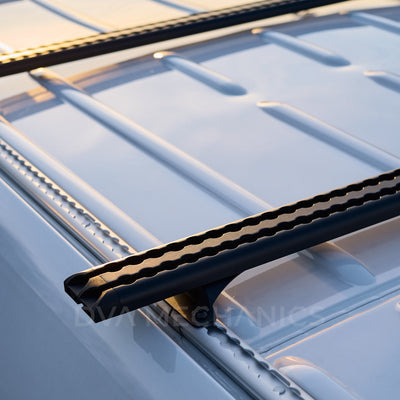
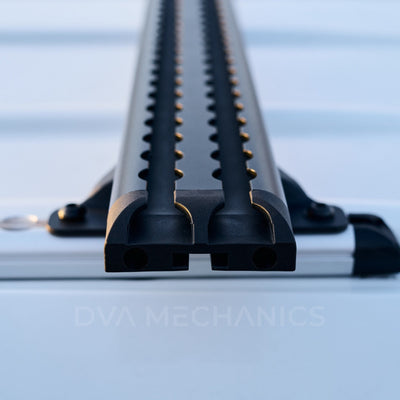
LoadSpan manufactures bolt-on roof rail and crossbar systems for Mercedes Sprinters designed to work within the vehicle's factory specifications, avoiding modifications that could affect warranty coverage or introduce new failure points. See loadspan.com/products for product details.